Featured summary
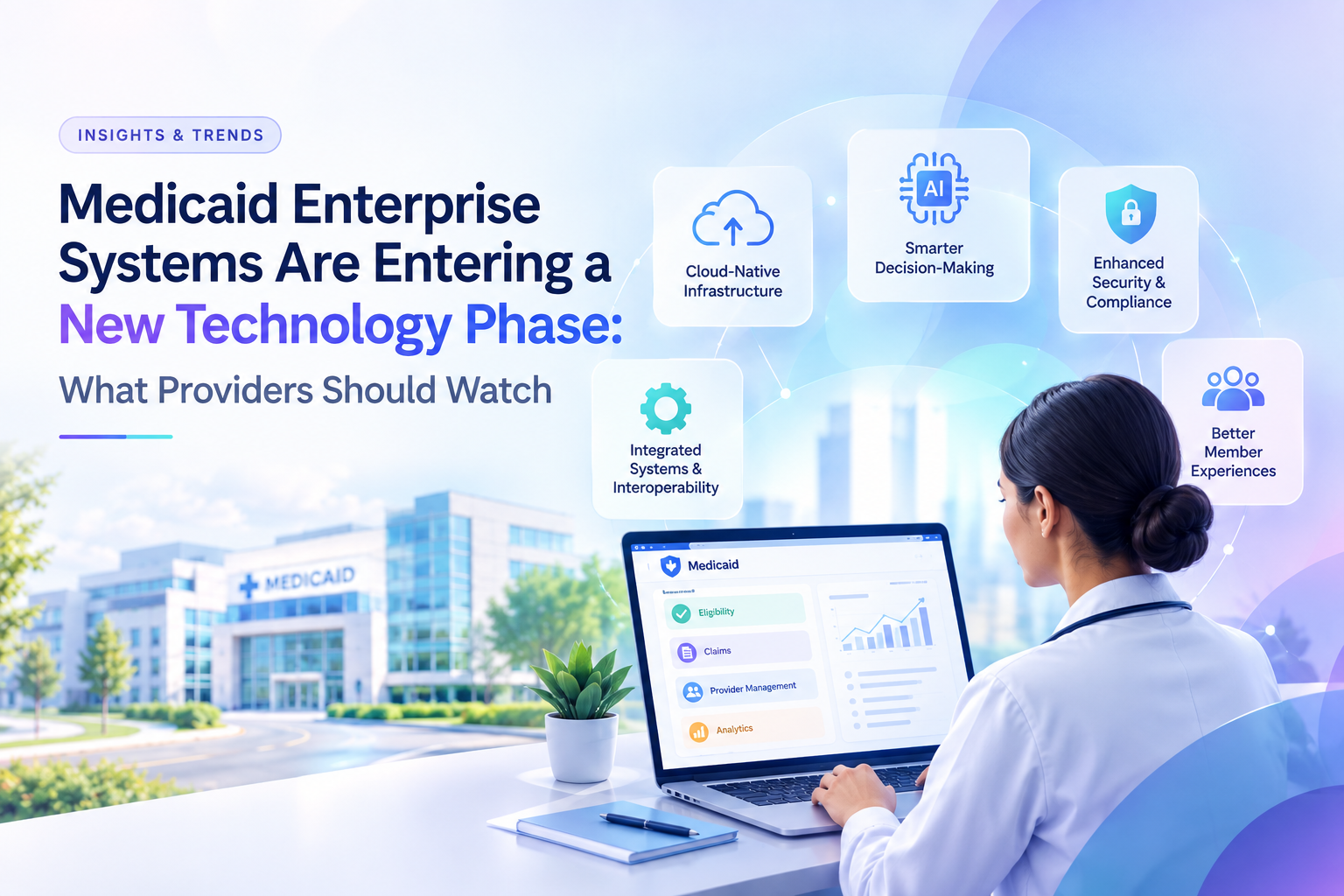
Medicaid Enterprise Systems (MES) are evolving from legacy platforms to modular, cloud-enabled and interoperable ecosystems. While these changes are led by state Medicaid agencies, providers will feel the impact through eligibility verification, claims processing, prior authorizations, data exchange and reimbursement workflows. Organizations that prepare early can reduce operational friction and strengthen revenue cycle performance.
Medicaid modernization is entering a new phase
States across the U.S. are investing in modern Medicaid Enterprise Systems to improve interoperability, data sharing and operational efficiency. For providers, this shift represents more than a technology upgrade — it requires readiness across workflows, data management, compliance and revenue cycle operations.
The operational challenges
- Fragmented Medicaid workflows
- Manual eligibility and authorization processes
- Limited visibility into claims and denials
- Data silos across systems
- Increasing administrative burden on staff
Problem and root causes
Legacy processes
Many provider organizations still rely on disconnected systems and manual interventions.
Data fragmentation
Patient, payer and authorization data often reside in multiple applications.
Limited automation
Repetitive tasks consume staff time and increase the risk of errors.
Operational readiness gaps
Technology changes frequently outpace process and workforce preparedness.
Preparing for Medicaid modernization
A provider readiness case study
Background
A multi-specialty healthcare provider serving a large Medicaid population recognized that upcoming Medicaid technology changes could affect claims, eligibility verification and reimbursement workflows.
Before implementation
- Manual eligibility checks
- Siloed claims management processes
- Limited denial visibility
- Multiple systems for data management
- High administrative workload
What was implemented
RSB Healthcare Consulting helped the organization prepare through a practical operational readiness effort:
- Assessed Medicaid workflows
- Identified process gaps
- Streamlined eligibility and claims operations
- Improved denial management workflows
- Enhanced reporting and analytics
- Established governance and compliance monitoring
Results and impact
The readiness work supported clearer day-to-day operations and prepared teams for future Medicaid technology changes:
How RSB Healthcare Consulting helped
RSB combined healthcare operations expertise, revenue cycle management, analytics and automation strategies to help the provider prepare for the evolving Medicaid landscape. RSB's experience includes billing operations, AR follow-up, eligibility verification, claims automation, analytics and healthcare process optimization.
Conclusion
Medicaid Enterprise Systems are entering a new technology era driven by interoperability, cloud adoption and data-driven operations. Providers that focus on workflow readiness, data quality and revenue cycle optimization will be better positioned to adapt successfully. RSB Healthcare Consulting helps healthcare organizations bridge the gap between technology transformation and operational excellence.
Key takeaways
- Medicaid modernization is now a provider issue, not just a state IT initiative.
- Operational readiness is as important as technology readiness.
- Strong data and workflow governance reduce disruption.
- Automation can improve efficiency and visibility.
- RSB Healthcare Consulting helps providers prepare for long-term Medicaid transformation.
Sources
Prepare your Medicaid operations for what comes next.
Connect with RSB Healthcare Consulting to strengthen workflow readiness, data governance and revenue cycle operations.
Contact Us